What is Celadon? | The Jade-Green Pottery Loved for Centuries
The Allure of Celadon
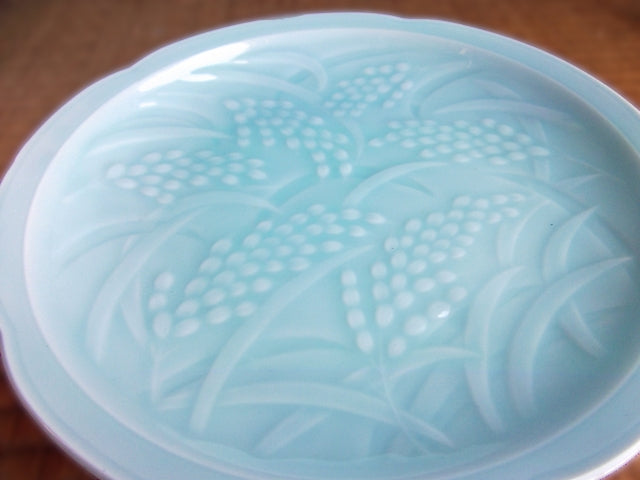
Celadon (青磁, seiji) is a type of pottery distinguished by its luminous jade-green glaze. For over a millennium, celadon has been treasured across East Asia — in China, Korea, and Japan — as one of the most refined forms of ceramic art.
How Celadon Gets Its Color
The characteristic green color comes from iron oxide in the glaze, fired in a reduction kiln (with limited oxygen). Different iron content, glaze thickness, and firing conditions produce a spectrum from pale blue-green to deep olive. The finest celadon has a translucent, jewel-like quality that seems to glow from within.
Celadon in Japanese Pottery
While celadon originated in China during the Han Dynasty, Japanese potters — particularly in Arita and Nabeshima — developed their own distinctive celadon traditions. Japanese celadon tends to be lighter in color and is often combined with carved or incised designs that catch the glaze in beautiful ways.
Appreciating Celadon
Color depth — The best celadon has rich, even color without dark spots
Glaze quality — Look for smooth, glass-like surfaces or intentional crackle (kannyu) patterns
Form — Celadon's beauty lies in simplicity; elegant shapes showcase the glaze
Light play — Hold pieces near a window to appreciate the translucent quality
Using Celadon Daily
Despite its refined appearance, celadon is durable porcelain suitable for everyday use. The cool green tones complement both Japanese and Western cuisine beautifully, making celadon a versatile addition to any table setting.
ITOWOCASHI POINT
会員になると、毎日のご来店・記事を読む・ミニゲームでポイントが貯まり、¥500・¥1,200 OFF クーポンに交換できます。