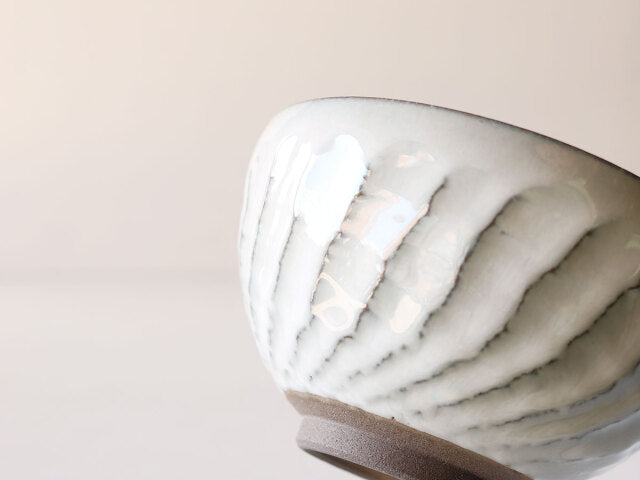
What is Porcelain (Jiki)? | Understanding Japanese Ceramic Types
Porcelain: The "White Gold" of Ceramics
Porcelain (磁器, jiki) is a type of ceramic fired at extremely high temperatures (1,200–1,400°C) using special clay rich in feldspar and silica. The result is a hard, non-porous, often translucent material that has been prized worldwide for centuries.
Porcelain vs. Earthenware
| Feature | Porcelain (磁器) | Earthenware (陶器) |
|---|---|---|
| Firing temp | 1,200–1,400°C | 800–1,200°C |
| Texture | Smooth, glass-like | Rough, porous |
| Weight | Light | Heavy |
| Sound | Clear ring | Dull thud |
| Water absorption | Nearly zero | Absorbs water |
Famous Japanese Porcelain Regions
- Arita / Imari (Saga) — Japan's porcelain birthplace, known for blue-and-white and colorful designs
- Hasami (Nagasaki) — Affordable, functional everyday porcelain loved by modern designers
- Kutani (Ishikawa) — Bold, colorful overglaze paintings on white porcelain
- Seto (Aichi) — One of the Six Ancient Kilns, producing diverse ceramic styles
Why Choose Porcelain?
Porcelain is ideal for daily use: it's dishwasher safe, microwave compatible (without metallic decoration), stain-resistant, and hygienic. Its smooth surface is easy to clean, and it maintains temperature well for both hot and cold dishes.
